Pages

Thursday, September 29, 2011

Iguana Sanctuary in Guatemala

One creature you may see in Guatemala is the iguana. I'm not sure how you feel about the leathery-looking, tree-climbing animals, but the Pineda family in Guatemala has 500 of them in an Iguana Sanctuary. (click on the youtube clip below for a documentary view of the sanctuary:)


One of the 5th grade teachers at the international school had a couple of pet iguanas in his classroom as well, so I got to meet them closer than I would have if they'd just been in the wild. He had his with a heated rock and a sun lamp and sometimes they would climb the small trees he had growing in his classroom. A different 5th grade teacher refused to enter his room from the fear that an iguana would jump off of the tree and attack her!

Having an iguana in a classroom could, perhaps, be challenging for the iguanas sometimes. One particularly curious and insensitive boy held down the tail of one of the iguanas until the iguana, following his instincts, released his tail and scrambled up a safer side of the cage. The students learned more about instincts and self-preservation in nature, and hopefully, how to NOT injure an animal on purpose.


Image: PANPOTE / FreeDigitalPhotos.net

In a country where iguana is sometimes used as a meat source in areas where protein is a privilege, having a family who would create a sanctuary for iguanas is extraordinary.

Would you visit an iguana sanctuary? Do you have one as a pet? Or, like me, do you just appreciate the miniature dragons from a distance?

Thursday, September 22, 2011

Beauty Through my Daughter's Eyes

My little girl sees things differently than I do. She looks at people and doesn't notice weight or symmetry or age or things I've been trained to see, but focuses directly on their smile and how they can connect with her. Those who take the time to talk to her and show her they care get a special title.


She thinks those people are "beautiful."

This goes for women and men alike. The older gentleman who always stops to shake her hand at church is "such a nice man! I like to shake his hand!" Our neighbor who stops feeding her chickens to talk to her is "beautiful!" Age has no bearing, she only sees if people care or not.

I know that from a young age you are shaped by people in your environment and their actions. This impacts me in two ways.
First, it helps me know how children view me and how little things I do can be so big in their eyes.
Second, it helps me realize how I am thankful that my daughter can find beauty in people who might otherwise be overlooked. I hope that one day this will go from seeing beauty in others to developing it in herself and passing it on.

Thursday, September 15, 2011

Cooking Adjustments in Guatemala part 2

Something I've written about before, cooking in another country, is always a bit tricky to figure out at first. Take cornmeal for example. It's necessary for that gritty crunch that gives cornbread or hushpuppies their unique flavor. Guatemala is a country where corn is one of the most consumed items. Usually, it is made into corn flour that is then used to make masa; a base for all sorts of things like pupusas, tamales, tortillas etc. Since corn is so abundant, it would seem that corn meal would be really easy to get... but I never discovered where! I am sure it is possible to make your own somehow by taking corn to a grinding meal, but I've never heard of that either. Curiously, some of the pizza places use corn meal sprinkled on and under their crusts. This makes me wonder if it is something that those restaurants import, or if I just really had no clue where to find it.

Another thing I discovered was really hard to find was inspired by a Valentine's Day gift from a student: strawberry flavored heart-shaped marshmallows. For me, the best thing to do with marshmallows, whatever the flavor, is to make them into rice crispy treats! People knew what those were, it's not something you see everyday here, but I figured Rice Crispies existed. After searching Paiz (now bought out by WalMart,) however, and several other stores I found that they apparently do exist, but only in the flavor of chocolate.

In Texas, many people visit border towns in Mexico and make it a point to bring back "real Mexican vanilla." Mexico is just north of Guatemala. For some reason, in Guatemala, all I could find was artificial vanilla. I'm not a super picky cook, but I definitely prefer real spices to their artificial counterparts.

Some other spices I had trouble locating were cream of tartar and sage.

When we first arrived in Guatemala, though much thicker than what we were used to, sour cream was not difficult to find. By this summer, though, I wondered if it were a seasonal item. I know it used to be in the store, but it hasn't been for several months prior to us leaving.

Beyond food differences or disappearances, something else I've noticed is that baking seems to be viewed as more of a "rich" thing because of the price of gas and difficulty in obtaining an oven by the majority of people. I've seen some people who use the oven part only for storage. Another difference with the ovens, besides being in Celsius instead of Fahrenheit, is that every one I've ever seen here only has one baking rack instead of two.

None of these things were major, just things I noticed while trying to prepare food I was used to cooking. Much of it, I am sure, was simply my lack of experience with finding things in Guatemala.

Have you had any luck finding these things, or perhaps have ideas for making them yourself?

Monday, September 12, 2011

Goodbye 2nd Trimester, Hello 3rd Trimester; (and babynaming expat challenges)

There's an issue with trimesters. While pregnancy is naturally a 40 week long thing, 40 is not naturally a number divided by 3. Hence, several different numbers are given for when one actually crosses the line between 2nd and 3rd trimester. It's a bit frustrating. I've seen the limit set at 27 weeks, 28 weeks and 30 weeks. To me, it would make more sense to just divide it into 4 terms: one for each set of 10 weeks! In any case, I'm considering this, the end of my 27th week of pregnancy, to be my end of the second trimester!

One thing that the third trimester brings with it for me, is a sense of urgency to decide upon a baby name within these last months. Something expat parents must consider with more detail than maybe those who stay in one spot are how the name of their baby will be said (and if it can even be pronounced) in the native language of the countries they plan to reside in. While I truly enjoy researching names, and believe in choosing meaningful names for my children, sometimes this is a bit challenging. A few conversations between my husband and I have gone like this:


Me: "Hey, what about this name!? It works in both languages."
Him: "Hmmmm, yeah, but you say it COMPLETELY different in both languages. Don't you think that would be confusing for the kid?"
Me: "Why couldn't we just stick with one pronunciation?"
Him: "Remember the what-we-thought-was-an-easily-pronounced-name that certain family still can't say right?"
Me: "You have a point. Let's keep looking..." ;)

Fortunately, (or unfortunately) we only care minimally about what people from the States or the next country we live in will do to mangle what we think is an easily pronounced name, so it doesn't get in the way most of the time. Even then, it just becomes something else to consider.

We've learned to prioritize to see if a name even gets on the list:
1. Is it meaningful? Do we like the meaning?
2. Is at least one of the names able to be pronounced in Spanish?
3. Is at least one of the names Hebrew to go with our family naming tradition?
4. If we choose to call the baby by the Spanish name, will our family be able to mostly pronounce it or will they disown us? (just kidding. ;))

Baby naming aside, the third trimester also has other challenges awaiting. The biggest one for me is managing weight. I have managed to walk a mile for every day of my pregnancy. Now, usually, that means I get up at 7:00 A.M. every week day and walk 2.5 - 3 miles (depending on how awake I am) before my family gets up and needs breakfast. I still say I've only walked a mile for every day in this pregnancy, because I like to round it down to be SURE I'm telling the truth. Be that as it may, that still works out to a whopping 193 miles total as of today. I truly believe that little, daily decisions and routines make big changes in our end results. It's crazy how a little bit every day has built up to so much, and probably more! I appreciate the health I have and want to keep it for as long as I can.

So, here I go into the last stretch of pregnancy! Hopefully, my next pregnancy post will be advertising the birth of our little man. :)

Thursday, September 8, 2011

A Tribute to Doors in Antigua and to a Photographer who Loved Guatemala

What's a door, really? An entrance. A way to bar yourself from the outside. Something that needs to be strong, yet movable. It's a door.

I've thought about these photographs of doors in particular lately. They were taken by Thomas Richwine, a photographer and friend who came to visit and volunteer in Guatemala. He really enjoyed touring Antigua! He recently passed through the door of this life into the next. He was 28.

I remember when he came back from touring Antigua. He was loaded with information and excited to share what he had learned!


Apparently, in Antigua, you can read more from a door than just it's architectural style and color. While touring Antigua with a guide, our friend reported back that in the colonial times one could know how many servants worked at a house by counting the amount of ornaments on the doors. Many people are fascinated by the architecture of Antigua, and in particular the doors.
I've included several pictures and links to other blogs with great pictures of doors in Antigua.


In the words of Maurenice: "The first thing we look at when entering someone's house is the door and the facade of the home. Antiguan's know the importance of this, and seem to be one step ahead as they have these very inspired and well crafted doors."


David, another visitor, says: "I recently visited Antigua, Guatemala and fell in love with the Spanish Baroque architecture. The city dates back to the early 1500's and has spectacular ruins of Colonial churches. It has been selected as an official UNESCO World Heritage Site. I was immediately drawn to the cobblestone streets and colorful facades. However, what really caught my attention were the fantastic doors on each street."


Many of the doors have intriguing very old hardware; locks, handles, decorations.


As said by neeko, "In the streets of Antigua, walls are everywhere. With its narrow sidewalks and cobblestone streets, it almost feels like you are constantly walking down an alley in some kind of inverted cityscape. From the streets, almost everything is concealed from public view. However, if you pay close attention to the craftsmanship of a door or window, you can get a much better idea of what lays hidden on the other side."


Especially the first time visiting Antigua, many people feel the same as this person from the Antigua Daily Photo who said: "they could just go around Antigua taking shots of just doors and windows."


From fellow bloggers FortyTwentyFour: "Antigua is filled with lovely architectural and design detail. It was hard not taking pictures of everything.I love all the doors in Antigua. Such detail..."


What do you think? Does it open the doors to your desire to travel to a place like Antigua, Guatemala? They inspired Thomas and continue to remind me of him to this day.

Tuesday, September 6, 2011

Texas Wildfires are Raging

In Guatemala, the disasters we experienced were earthquakes, hurricanes, volcanic eruptions, and swine flu. In Texas, the extremely dry summer has parched the ground making wildfires a huge problem. Add to that the extremely strong winds this week and it was a recipe for fire disaster. There are many burning right now:


According to the Texas Forest Service:


"Wildfire update – Sept. 6, 2011

Current situation:

· Yesterday Texas Forest Service responded to 22 new fires for 7,544 acres, including 10 new large fires.

· In the past seven days Texas Forest Service has responded to 181 fires for 118,413 acres.

· It appears that in the past 48 hours, more than 700 homes have been destroyed. As better assessments come in, we will continue to update the situation report.

· 251 of the 254 Texas counties are reporting burn bans.

· Daily detailed fire information can be found at inciweb.org.

New large fires from yesterday (more than 100 acres in timber, 300 acres in lighter fuels; or where homes were lost):

*Note: Details on many fires are still unconfirmed. The Dispatch Tracker System was down most of yesterday and went down again this morning. Most of the details below are from late last night."

Many people I know have had to evacuate their homes and many more are in danger.

Please keep Texas in your prayers!

Monday, September 5, 2011

Birthdays with Family in the States

Something nice about being home for the baby's birth is that we also made it home in time for Talia's birthday! Birthday's just aren't the same without family... So this year is special for that reason, if not because it's her last birthday as an only child. :)


Talia requested chocolate cake with chocolate icing and strawberries. I made the cake and icing and put the strawberries, but my mom gets the credit for the creative edging. I thought it was delicious, the baby must have too (from the way he kicked afterwards) and, importantly, Talia loved it!

Something we had to be careful about were presents. We were clear up front that anything received would have to be able to fit into a suitcase for our next adventure once little man is born, or it might get left behind. That's just how it goes. Happily, Talia's still at the age where cutting the ribbon off of the package and ripping open the paper are totally what makes getting a present, not the actual gift... but our family was very thoughtful and her gifts are definitely stuff we can use and she'll enjoy!


Talia woke up this morning so excited because it was her birthday. It's funny to see how much she can understand and appreciate now. I'm glad we were able to share this one with family!

Thursday, September 1, 2011

Getting Ready for Homeschooling Abroad

Talia has been doing really well recognizing letters and knowing which sounds go with them, including some blends, for a while now. Since I am homeschooling this year, part of my challenge has been figuring out which of the millions of options will work best for me in a place outside of the States and where shipping is not really worth it. Suitcases are already limited with space on the trips home, so that's not the greatest, or only option I would like to have.

Part of this problem we solve by using Starfall's online supplementary curriculum. Some of the reading challenges will be solved by using the online accessible Reading A-Z program and other online stories. However, though my daughter likes working on the computer, it's not really something I want her stuck to all of the time. Learning is so much more than a brain thing. Especially at her age, the whole body helps her learn!

Something she's really enjoyed is an "Alphabet Fun Sticker Book" by School Zone. It has helped reinforce all of the letters and their sounds, and taken it to the next step of recognizing which sounds words begin with. (Plus, she loves getting the stickers neatly in their boxes.) After working with this slowly over a few days, she came up to me and started talking about all of the words she could think of that started with the "ssss" sound, even though we hadn't studied the "S" in the book yet. She knew that "S" made that sound and came up with: snake, sock, sun and several other words that also started with "S." I was excited that she was making that connection with oral language and not just with the written letters in front of her. She can take the sounds of a word and spell it with the refrigerator letter magnets, but hasn't quite gotten that in reverse yet putting all of the sounds of a written word back together to quite be completely reading yet. But soon!

With reading, I have a plan and an idea of how to work with her at home, at least for this coming year. With math, I felt a little helpless. Talia knows how to count to 29 consistently, and if I tell her what comes after the following _9's, she can continue to 100. She has made the connection between each hand having 5 fingers and says "Look, mommy, two 5's make 10!" or "I have 2 bananas and there's 1 over there, that makes 3!" So I think addition will be a natural next step for her. I just have to get over my own phobia of numbers. I found several workbooks in the States for math that I think will help with that. I have ideas for manipulatives as well. Advice from people who've done this before, though, is always welcome!


Part of homeschooling is knowing your child and where they are in different areas and focusing on how to get them to the next level, no matter how nontraditional or unschool-like that approach might, or is able to be. Surely at first it is always a bit apprehensive to think of what will be needed before you have experience, but hopefully this will improve when I gain that experience.

Do you have any ideas for math or reading that worked for you starting out? How about homeschooling abroad? Or just sorting through the many, many homeschooling options without going broke or crazy? I'd love to hear other parents' thoughts who've gone down this road before.

Thursday, August 25, 2011

Another "Unscripted" Part of Our Saga: Goodbye for now Guatemala...

When we moved to Guatemala, we weren't sure if it would be a permanent move or not. We knew we wanted to continue to live abroad after our contract ended, but Guatemala, specifically, was not our end destination. We value 3 main things for our family:
1) Our faith.
2) Our own little family and the values that hold it together and,
3) Freedom; in many things- including the ability to be flexible in deciding where our next destination will be.

Because of #3, my husband has been building his online businesses for awhile, and when our contract was up with the international school in Guatemala, we could stay or leave, whichever. We had a wonderful midwife in Guatemala who we were looking forward to delivering with in December. However, Guatemalan bureaucracy and the uncertainty of the length of time it would take to get the paperwork to leave the country after the baby were born really made our decision, since it limited flexibility in choosing our next step.


We decided to have the baby in the States, where paperwork is a bit more reliable and citizenship not so tricky. I have another amazing midwife here. And, we are excited about figuring out the next step in our family saga, with our new addition! Who knows which country we'll end up in next, but I know we'll learn just as much or more as Guatemala taught us! I plan to continue posting things I learned from Guatemala, or find interesting and, when we make our next move, posting about all of the new things we are sure to learn there.

I suppose the part of this transition that makes it feel more "unscripted" than others is the amazing blessing of flexibility and choices we have available. We're so blessed to be able to move quickly when we need to. It was a hectic couple of weeks, but a successful transition.

Here's to adventure and the next step in our saga, which, at the moment, is still "unscripted."

Thursday, August 18, 2011

Volunteering in Guatemala: Entremundos- a volunteer placement program

1. Who are you and how did you get interested in Guatemala?
My name is Jocelyn Bates and I am the managing director of the NGO EntreMundos in Quetzaltenango, Guatemala. I first came to Guatemala 5 years ago for a break after a job managing educational projects in Belize, and I never left!

2. How did you get in contact with EntreMundos?
I found out about the organization during my first few years working in Quetzaltenango as they produce a free magazine and offer conferences and workshops to NGOs but I first starting working with the organization in 2009 when I volunteered to organize a forum for environmental NGOs.

3. What is EntreMundos’ goal in their community?
EntreMundos strives to connect NGOs and grassroots organizations with
resources. These resources can be human resources such as connecting
them with volunteers who can assist them, but we also offer low cost capacity building workshops and computer courses to NGO and community group members, the idea being that we can help to strengthen the organizations and empower their members develop effective projects to help their communities. We also produce a bimonthly and completely bilingual free magazine designed to raise awareness about human rights and development issues.

4. Where are you located?
We are located in the city of Quetzaltenango, Guatemala’s second biggest city, but the groups we work with are all around the country.

5. How could future volunteers get involved?
We offer a volunteer placement service for people interested in getting out and assisting the NGOs and grassroots organizations of Guatemala. Our database contains the contact details of 120 organizations looking for assitance and is free to access at www.entremundos.org. If you are interested in setting up your volunteer placement in advance and require our assistance, we offer a service doing just that for a donation of $40. We also offer assistance with setting up learning and volunteering trips for groups too.

6. What is one experience that you remember the most?
There have been so many great experiences during my time here, but one image I think I will always take with me is that of seeing a group of 30 Guatemalan NGO and community group members at a workshop, intent on
improving their organizations through gaining skills, each one of them completely dedicated to their work of helping and improving the neediest Guatemalan communities.

7. What is something you learned from volunteering in Guatemala?
Always be patient and flexible and it’s important to keep a sense of humour!

8. What advice would you give someone wanting to volunteer with your
organization?

Be realistic about your expectations for volunteering. Use your skills wisely and be honest about what you can offer to an organization. Never make promises of things you can’t deliver and be realistic about your language skills – very few people speak English here! If you really commit yourself to the volunteer work you will be amazed at the real difference you can make to an organization or group, and you will no doubt have some amazing stories to tell too.

9. Do you have any extra thoughts you'd like to share?
Guatemala is the not the highly dangerous country you have heard
about. It is unlikely you will come into contact with any violence worse than petty theft (this is a developing country after all). You just need to take the same precautions you would when traveling in any major city. The majority of Guatemalans are incredibly welcoming and warm to foreign visitors and if you take that ‘risk’ of coming here, you will find a beautiful and unique country but one that is in much need of assistance.


Jocelyn Bates
Directora

Entremundos
6a Calle 7-31, Zona 1
Quetzaltenango, Guatemala.
(502) 7761-2179
(502) 4228 3816
http://www.entremundos.org

Thursday, August 11, 2011

2011 Guatemala Presidential Elections: Otto Perez Molina


How are the Guatemalan genocides of the 1980's affecting the 2011 presidential elections?

One of the candidates that many of the people consider likely to win is Otto Perez Molina. But he comes with his own set of issues.

A writer from Guatemala, Miss Trudy who blogs The Innkeepers Tail says: "All seems to point to Otto Pérez Molina's being Guatemala's next president."

Why could this be a problem? To understand you have to go back to the 1980's mass killings of indigenous people in Guatemala by the Guatemalan military:

"Pérez Molina is broadly considered to have been one of the military officials involved in genocide in the 1980s. Although he does not categorically deny having been involved in many Mayan civilians being killed, he does deny that this was genocide per se. A matter of semantics, of course, but an important one. Genocide, as defined today by international courts and human rights, includes what was going on in the highlands at the time. It is correct. And if accused and tried for that, it would be equivalent to being guilty of war crimes."

Being president would change the consequences for any of his participation in the acts of genocide. This could, in turn, sway the future consequences for many of those people who were involved:

"...As president he would have complete immunity from being tried in court and, as some friends in international aid tell me, they are afraid that as president, he might limit access or even close down the Historic Police Archives, which has been the documentation source for the recent trials which have ended in the historic landmark sentencing of former soldiers for genocide. As it is, one former Chief of State for a previous military dictatorship, an octogenarian, is under trial right now. Since up to now only foot soldiers--scapegoats, to an extent--have been tried, this is a first."

Why would Guatemalans elect a man like this to the position of president? Again, Miss Trudy explains:

"I have no doubt he will end up being president, since for many hard-to-explain reasons, Guatemalans like slogans such as his, mano dura, "hard fist" and rigid, authoritarian figures. Mayans are at the bottom of the social totem pole here, and having been them the fodder for genocide, I guess it just doesn't seem to most Guatemalans as a big deal for not voting for Pérez Molina."

She wraps up her thoughts with this:

"So, as that silly saying goes, it is what it is, and people have the governments they deserve. In other words, people are the makers of their own versions of hell."

Sunday, August 7, 2011

Guatemalan 2011 Presidential Elections: The year for women to run on men's coattails?

Guatemalan presidential elections are coming up this September 11, 2011. As always, there's a lot of speculation, mudslinging and political campaigning. With Guatemala, however, there's also the sinister addition of murders with every election campaign. According to The Guatemala Times, the first murder of the season occurred this January 2011.

Aside from the sadly normal political proceedings for Guatemala, it seems this is the year for women to run for presidency as a liaison for a man who is not eligible.

Of course, much of the news lately has been concerning The First Lady Sandra Colom, wife of current President Alvaro Colom. Or ex-wife? Since she was legally barred from running according to the Guatemalan Constitution that bars presidential family members from running, she filed for a divorce from president Colom. However, the The Supreme Electoral Tribunal of Guatemala voted her down with an overwhelming majority. This sparked protests that stopped up the capital's traffic for a day, but their only plan at the moment is to appeal.

Guatemalan Politics: The Popular Struggle for Democracy

Sandra is not the only woman trying to run for presidency after her husband. The GuateFriends blog writes:

"Mayor of Guatemala City, Alvaro Arzu, ex-president of Guatemala. Article 186 of the Guatemalan Constitution states that the person who has been president by democratic elections or coup d'état, can not be eligible as presidential candidate. His decision to run for the presidency caused alarm in the right wing sectors of Guatemala. After a “no” answer to his inquiries at the Guatemalan Congress to legitimize his candidacy, Alvaro Arzu has now decided to promote his wife Patricia de Arzu as the presidential candidate of his party. The PR campaign is up and running, the picture shows Patricia de Arzu alone now (a week before it was the couple) with a slogan of kindness and order."

Who knows how they will try to circumvent the law.

Guatemalan Politics The Popular Struggle for Democracy (1993 publication)

In addition to Sandra de Colom and Patricia de Arzu, there is Zury Mayté Ríos Montt Sosa de Weller. The Guatemala Times reports:

"Parliamentarian, Zury Mayté Ríos Montt Sosa de Weller is the daughter of ex- military dictator Efrain Rios Montt. She was proclaimed the official candidate for president of the FRG party in October 2010. She is legally barred as a candidate according to the Guatemalan Constitution that bars presidential family members from running."


These are not the only women running for president. Also running are Rigoberta Menchú, Adela Torrebiarte, and apparently someone with the surname Montenegro. I can't find information on all of the women who are supposedly running, but I find it interesting that The Central American Blog says:

"Virgilio Alvarez from FLACSO divides the women into two divisions. Those who have used their personality and work ethic to make a name for themselves (Menchu, Torrebiarte, and Montenegro) and those who are riding the coattails of men (Baldetti, Torres, Rios, and Arzú)." (My words in parenthesis.)

If a woman is to win, may it be one who won it honestly and fairly.

Thursday, August 4, 2011

Harina de Camote/ Sweet Potato Flour: A gluten-free option

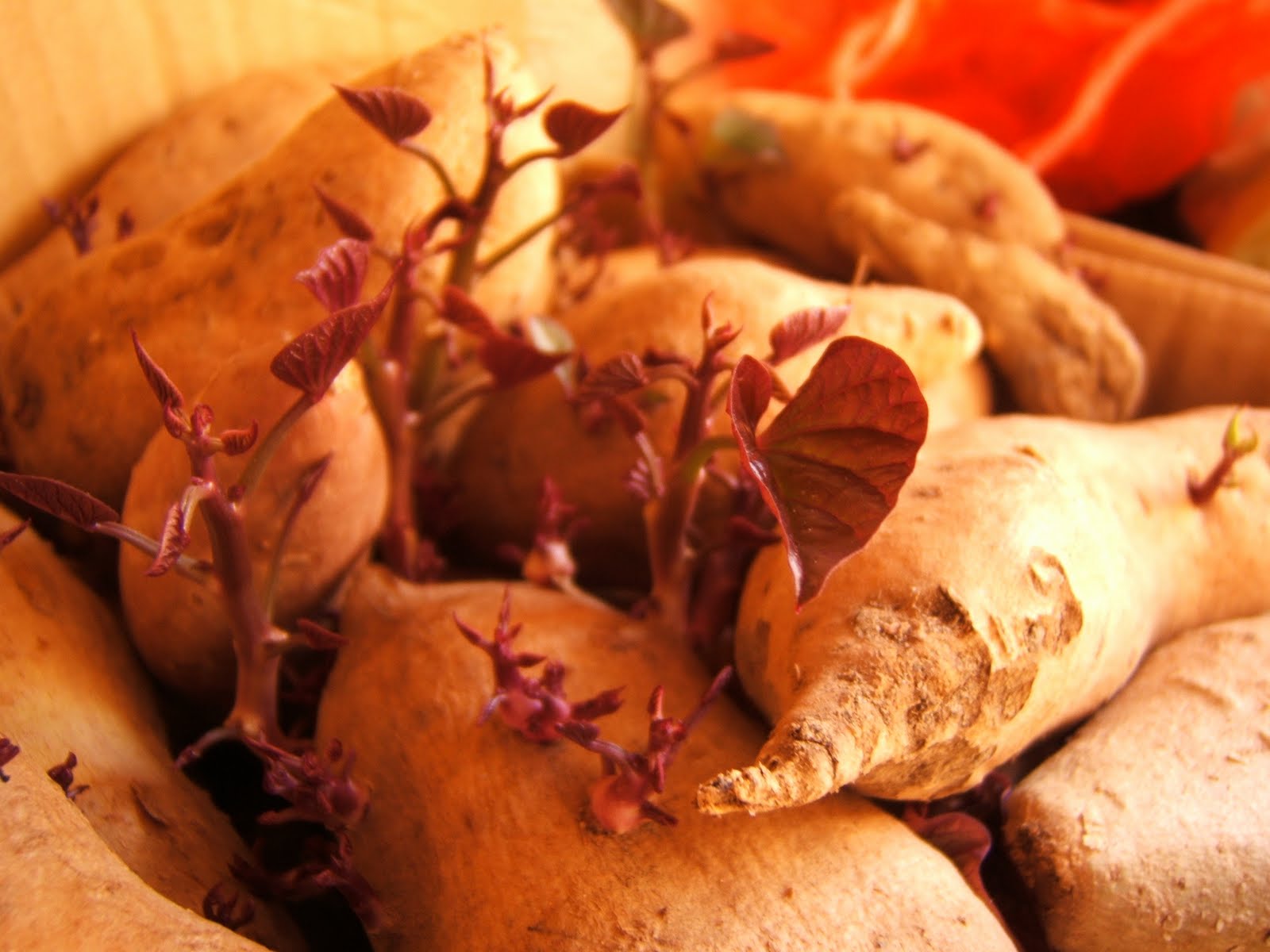
As I've mentioned before, I really, really like the orange, moist version of the sweet potato found in the part of Texas I am from. Although it isn't native to Guatemala, there is another, purple-skinned, dry-meat version that is. While this version still works well with my mom's amazing sweet potato pie recipe (sort of like this one,) it's not at all the same baked or mashed. And, yes, I like the sweet potato for more reasons than flavor, they pack a nutritional punch:


"The sweet potato has been a significant source of nutrition for over 8,000 years and is now being seen as an incredibly underappreciated yet nutritious food. It is high in fiber, vitamin A, iron, and calcium. Despite the name “sweet,” studies have shown that it actually helps stabilize blood sugar levels. The roots are most frequently boiled, fried, or baked. They can also be dried and processed to make starch and flour."

Because of my obvious fondness for the sweet potato, I was really interested when I heard of people using sweet potato flour, especially to create gluten-free baked goods. 

"Sweet potato flour holds moisture well, brings a richness of flavor, and adds a slight sweetness to any baked good... such as breads, cookies, muffins, pancakes and crepes, cakes, and doughnuts. It can also be used in soups, as a thickener for sauces and gravies, and in breading for fish. It is raw flour and does not require cooking before use. Sweet potato flour is great at holding moisture in baked goods and imparts a slight sweetness."


Now, this, is something I want to try! I'm always up for finding different baking options, and while none of us are allergic to gluten, I work with people who are and who are always looking for better options for baking. Besides, "according to some celiac specialist researchers, everyone has some reaction to gluten, but non-celiacs recover quickly" so including some gluten-free goods in the family diet is likely to benefit us all anyway.


While "harina de camote" or "sweet potato flour" is considered a product of Peru, I haven't found the flour yet in the physical Latin American market arena, only online. So, experimenting with this flour is still on my "to do" list for future endeavors. However, I have found how to make my own. This site about George Washington Carver and how to make sweet potato flour tells a lot of the sweet potatoes history as well. If you are interested in a pdf document titled "Making sweet potato chips and flour," follow this link. For just a website explaining how to do that, follow this link.

There are apparently many, many ways you can use sweet potato flour as a substitute for regular flour, but if you would like some recipes using specifically sweet potato flour try this link.

Have you tried using sweet potato flour? What other successful gluten-free options have you found?

Thursday, July 28, 2011

2nd Trimester Triumphs and Fears

If you've read about my journey to running a 10k and then running most of a 5k in my first trimester this May, you already know two things: I'm fairly new to living healthily, and I'm pregnant. Those two facts together are sometimes hard to manage. Weight gain, whether healthy and with good reason like pregnancy, or not, gives me terrible flash backs. Rooted in the fear of former obesity, I hate feeling like I'm slowly getting trapped by my old body. Some of the fear comes from the future: wanting to have the healthiest birth and baby possible. I feel like, if I don't keep moving and find positive things to do, these past and future fears will suffocate my present.


There are several ways I'm trying my best to combat this fear:
1) I walk an hour every weekday morning. If I miss a morning, I make it up somehow in the day or walk extra the next day. I jogged in the past, but ligament pain is hampering that at the moment.
2) I swim as much as possible.
3) I find physical things to do that aren't too strenuous. Raking the yard, checking the mail (at the end of a long driveway,) hanging clothes on the clothesline, playing outside with Talia... basically, just looking for ways to keep moving instead of giving in to the siren's call of technology, air conditioning and the couch!

I try to think about the good things:
1) I lost all of the pregnancy weight within the first month. Though that still left me much higher than I should have been, the pregnancy part came off.
2) I am over halfway through my pregnancy and I've only gained 13 pounds. It could be much worse.
3) Even if I do gain some weight, I have the tools to know how to fight it this time. Even if I gain as much weight as I did with my first pregnancy, I'll still weigh LESS than my first pre-pregnancy weight!
4) Though always hungry, I try to make sure I'm really hungry; stomach growling or I can feel hunger, before I eat. I try to eat lots of fruits and vegetables.


Fear can either paralyze me or motivate me to overcome it. I choose to use what I have and what I know and keep moving, and moving forward! Afterall, the best way to overcome this fear of weight gain in pregnancy is to go the whole length and prove to myself afterwards by experience that I could do it.

How did you combat too much pregnancy weight gain? Do you have any tips that would help?

Thursday, July 21, 2011

5 Expat Parent Observations: United States vs. Guatemala

When we come back to the States I always notice several things that impact my daughter differently here than in Guatemala. However, this is within a very narrow spectrum, so my experiences do not accurately reflect Guatemala or the States as a whole. Only my experience between a city setting in Guatemala City to a country setting in Texas. Here are some of the things I've noticed, particularly relating to raising children:


1. Larger range of ethnicities:

In Guatemala, most people are the following according to the CIA World Factbook:
Mestizo (mixed Amerindian-Spanish)and European 59.4%,
K'iche 9.1%,
Kaqchikel 8.4%,
Mam 7.9%,
Q'eqchi 6.3%,
other Mayan 8.6%,
indigenous non-Mayan 0.2%,
other 0.1% (2001 census)

In other words, almost everyone is brown-haired, brown-eyed, tan-skinned or else they are obviously foreign. There is a conspicuous lack of people of African descent. When we visited the States, that resulted in the following conversation:

Talia: "Mami, that lady has brown skin!"
Me: "Yes, it's beautiful, isn't it?"
Talia: "But my skin is peach!"
Me: "Yes, everybody is different."

In the U.S. there is a much broader range of ethnic peoples- and that is a good thing when it comes to exposing children to more than one kind of nationality.

2. Free-range child rearing is more possible:

When I say free-range, I mean that children have a yard to play in that allows for minimal supervision, like an adult washing dishes in the house at a window and still checking outside occasionally. In Guatemala, at least in the city, that is a difficult thing to come by. There aren't really "neighborhoods" the same way there are in the States. Children, especially foreign-looking ones, can't just wander off to play if you don't want them to get kidnapped. Outside of the city, this is much less extreme! Talia has enjoyed being able to run around outside (always in the yard, always within sight) and play around trees and foliage that would never fit in a little city "garden." I appreciate the lack of stress of constantly having the thought in the back of my head that someone could run off with her. (Though I am aware that yes, that is still possible here.)

3. The lack of walls and barbed wire is surprising:


If you want any degree of a place like my #2 to play in Guatemala, then walls and barbed wire are necessary. It's nice to actually see houses here in the States. In Guatemala, everything is behind a wall with layers of barbed wire on top. You can't just drive anywhere and see a house, you have to have permission to enter the gate and then you might get to actually see a house. At first the barriers everywhere isn't such a big deal until you go back to the States and feel like you can breathe again... unless you've gotten so accustomed to the walls that you then feel unprotected. I like for my daughter to experience life without walls occasionally.


4. Playing with other kids in English:

In Guatemala, even if the parents speak English, usually the language between playing children is Spanish. I like this. I'm glad Talia is developing her Spanish skills from the playground up. She always speaks English with us at home, and we know that it is developing also. However, her English is more elevated than her age because of this. I don't think it's a bad thing that she doesn't speak with other kids in English very often, but I am glad when she gets the opportunity.
On the flip side, this helps me appreciate the truly bilingual environment we have found in Guatemala. One big reason to move to a Latin American country was to have a bilingual child. I like that during her language's most formative years, she is in a bilingual atmosphere. She amazes me daily with her grasp of both Spanish and English. (She's pretty good at understanding Portuguese too!)


5. Extended family:

One of the most common things an expat must choose to give up is his or her close proximity to extended family when moving to another country. It's nice when we get the chance to visit and Talia can play with and talk to other family members besides those she lives with every day. I grew up very close to my family and it's definitely the thing I miss the most when we are in Guatemala. I'm thankful for technology and the contact that has made possible, but it will never come close to a real life hug or conversation.

Most of these reasons have also contributed to us moving out of Guatemala City and to a less hectic, more country place outside of the capital- more like where I was raised.
I want to be able to grow herbs outside.
I want to be able to walk consistently.
I want Talia to have a good place to play outside with her puppy.
Nature is therapeutic and I want her to find that for herself.


Guatemala has many beautiful things to offer, but, in my opinion, the majority of those things are not found in the city setting, but rather in the majestic natural environment.

Thursday, July 14, 2011

A Taste of Asia in Guatemala: Spring Rolls

When we moved to Guatemala, the last thing I expected to learn was any form of Asian cooking. However, there were several things I didn't know: 1) People from all over the world work at international schools, including people from Asia, and 2) There is a considerable Korean population in Guatemala, which means at least one good Asian market.


A friend who helped me on my journey towards fitness also introduced me to spring rolls. She learned from a teacher who had taught in China and got pointers on how to make the sesame/vinegar combo from another teacher who was Japanese. It's really amazing how many types of people come together in the international arena.

While I like trying new foods, I wasn't sure I would like spring rolls. I wouldn't eat many of the following things raw or in this combination normally:


This combination included the raw ingredients of cabbage, (you can use lettuce) carrot, cucumber, red pepper, mango, spinach, and sesame seeds. I was totally addicted after the first bite!


The first thing that we cooked was the vermicelli noodles:


The process is almost identical to regular pasta: boil water and then add the noodles. The exception is that they seem to be more delicate and easier to overcook.


Save the hot water from the noodles to help un-stiffen the rice paper wrappers:


The rice paper wrappers were the weirdest, funnest part of making spring rolls! To me, they start out looking like plastic, circular place mats. Once placed in the warm (not too hot or they'll crack!) water, they sort of "dissolve" into a wiggly sticky wrapper that I treat like Saran Wrap because it tends to stick together easily. However weird it sounds, it is quite delicious and one of the best textures that brings the whole spring roll (literally) together.

Once the wrapper has "dissolved" in the warm water, we let held it up and let the excess water drip off, then placed it on a waiting plate. There, we put a layer of lettuce or cabbage, grated carrot, cucumber strips, red pepper strips, mango strips, spinach, sesame seeds and a good helping of the noodles. This is also delicious with avocado inside... but in my opinion, anything is good with avocado. Wrapped up like a burrito, it now looked like this:


Next, we cut the spring rolls in half and added about a teaspoon full of what I'll call "special sauce" to the noodles to give them some flavor. I couldn't remember exactly how this part went, so I just added the sesame oil, white vinegar and soy in a combination that I thought would taste best together. If you have actual amounts, please comment. Otherwise, just experiment with the taste and see what you like best. We really liked how ours turned out.


What really added the crowning flavor for me to this entire concoction, however, were the following two sauces: sweet chili sauce and wasabi!


It doesn't take much of either of these two sauces, especially the spicy wasabi! A small amount is enough, though, to enhance all of the naturally delicious flavors that already exist.


To raw fruit and vegetables that taste delicious!


Do you have a favorite combination for spring roll ingredients or some pointers for this first time learner?

Monday, July 11, 2011

Thank You from the Birthing Clinic in Guatemala

Not long ago we brought your attention to an immediate need for a birthing clinic in Guatemala who needed two fetal dopplers. Because of your generosity, both of those needs were met!


You've helped add a much better option to this list:

What birthing options are available for Guatemalans?

•"For poor Guatemalans, there are the national hospitals: C-section rates are getting close to 50%, all kinds of other interventions are routine, and the woman is unaccompanied through her birth."
•"The IGGS, the social security hospital, is very similar."
•"Many people who can barely afford it therefore opt for one of the small private clinics, only to have the same experience but paying for it."
•"Aprofam, an organization that started out subsidized but has to be sustainable at this point, has taken the same route in order to sustain itself."
•"In the rural areas there are local midwives available, some of which are very experienced and well (mostly self-) trained, while others are not."
•"The big hospitals in the city have a C-section rate of 70 to 80%, besides being very expensive."


Now, for more women, a natural birth in the clinic is more of an option. Thank you!

Hannah, the registered midwife in Guatemala City who runs Manos Abiertas for low-income families and also has a clinic, Centro de Parto Natural, in the capital was appreciative to have those two things marked off of her list.

Another immediate need they have right now is the donation of a working laptop.
"We have very little room and it is specifically meant for my accountant who travels between the two clinics and for our educational presentations."


However, if you live in Guatemala City, a desktop would be much appreciated as well, "for the Ciudad Vieja clinic that just has one and people are always in line. It should just not be too old and yes, in Guatemala."

If you have a laptop (from the States until August) in Guatemala or a desktop in Guatemala you would be willing to donate please comment with an email address or email us directly at sagaunscripted [AT] gmail (dot) com.

Please consider donating.

Spanish educational material about birth approx. 60$ or 470Q
1 professional grade, waterproof fetal doppler: $125 or 985Q plus shipping
1 complete birth package 240$ or 1,884Q


Also on their wish list is an obstetric ultrasound machine. Any donation, no matter the size, will help make a difference in a woman's life.

Thank you, from me, from countless women who would tell you if they could.

Read an interview with Hannah here.

Thursday, July 7, 2011

Volunteering in Guatemala: Education and More- Solola

Many people want to get involved with volunteering in Guatemala, but know little about the organizations available or what those organizations do. This is one in a series of interviews with amazing volunteer organizations in Guatemala.

Karen Pickett (pictured below, right) is the director of Education and More, a Fair Trade Federation non-profit group dedicated to getting weaving by Guatemalan women of the Solola region exposure, income and education for their family.


1. Who are you and how did you get interested in Guatemala? My
initial visit to Guatemala was with a mission team to help build
houses and when I met some women weavers and got to know them it got
me interested in helping them sell their handcrafts and weavings.
Education And More was born as a result and is a Christian, Fair
Trade nonprofit, registered in the United States as a 501c3
nonprofit organization.

2. How did you get in contact with or start Education and More? I am
the founder / Director of E&M and started the organization in 2006
to help the women artisans I had met sell their weavings and to help
them educate their children.

3. What is Education and More's goal in their Guatemalan community? Our primary mission is two fold -- educating children and helping women earn a
fair wage so they can help to support their families. We feel that
as we help artisan groups sell their handcrafts and weavings the
dollars brought into communities has a ripple effect in the whole
community. Education helps the entire community whether it is the
young children finally able to go to school or young adults
returning to school to learn a skill or get a university degree.
We work with churches through our sponsorship program to give
educational opportunities to students of all ages -- pre-primary
through University and even technical, vocational schooling. The
sales of the handcrafts also helps the families in the ability to
educate their children, to give better nutrition to their family
because of the fair wages they receive, and business and vocational
skills through technical education for the women artisans.


4. Where are you located? We work with artisan groups and churches
in the Solola department and have recently expanded and we are
beginning to work with poorer groups in the Queche department of
Guatemala.

5. What is one experience that you remember the most? When one of
our women artisans started crying as she was trying to thank us for
all the help we give them in earning money to help their families.
The artisans are just so very thankful for all the help Education
And More gives to them and their families. It is very humbling!


6. What is something you learned from volunteering in Guatemala?
People are the same the world over; women are uniquely capable of
understanding each other even through the language barriers and
cultural differences.

7. How could future volunteers get involved? We are looking for
volunteers to help us in a variety of ways: hosting Fair Trade
bazaars at their church, school or home; helping us with our
Facebook pages and other online media, spreading the word about our
work and mission, designing new handcrafts, speaking to schools,
college groups, churches about E&M and our mission. There are many
ways we need volunteers to help!

8. What advice would you give someone wanting to volunteer with your
organization?
We need passionate volunteers who are interested in
Fair Trade, education and helping to reduce the poverty in
Guatemala! We need your help and need your skills to grow the
organization! We are expanding into some poorer regions of the
Queche department of Guatemala and need more sales of the handcrafts
to help more women. Once you get involved and eventually go to
Guatemala
and meet our artisans your life will never be the same.
We invite you to contact us for opportunities to volunteer with the
organization.


9. Do you have any extra thoughts you'd like to share? Education
And More is very passionate about helping not only the artisans but
their entire families and communities and we have developed programs
to do that. Programs such as: educational opportunities for women,
sewing centers for vocational training for women, educational
opportunities for adults returning to school and children; micro
enterprise help and micro-credit loans, business training,
development and technical assistance, spiritual development through
the Christian Education classes in churches. Our partnership with
local churches gives the sponsored students a community within the
body of Christ so they can grow spiritually as well as in body and
mind.
We are a screened member of the Fair Trade Federation and work with
artisan groups to help women and their families. Fair Trade gives
the artisans a fair wage plus many other benefits for them and their
families.


Thanks!

Karen Pickett, Director
Education And More
P.O. Box 201
Burlingame, KS 66413
http://www.educationandmore.org

Blog -- http://educationandmore.wordpress.com/

You can also contact Education and More on Facebook.